
temporary exhibitions
“…like a root out of dry ground…” – 450 Years of he Canons of Hercegszöllős
9 June 2026 – 30 January 2027
Church History and Stories of Houses of Worship
Our exhibition consists of two main sections. The ground-floor exhibition presents significant milestones in the history of the church district. We have sought to guide visitors from the era of Ottoman rule to the present day, highlighting the sustaining and preserving power of Reformed identity.
The complete Hungarian-language Bible, Calvin’s Institutes of the Christian Religion, and the Second Helvetic Confession provided the spiritual foundation for the collection of ecclesiastical regulations known as the Canons of Hercegszőlős, adopted in 1576, which shaped every aspect of life within the church district.
Daily life was challenging in the parts of the country divided during the Ottoman occupation, while in the following period Protestant churches were subjected to severe restrictions. In the eighteenth century, Reformed aristocrats assumed the roles of patrons, trustees, and intermediaries, representing the interests of their church. The possibility of free religious practice was opened by Emperor Joseph II’s Edict of Toleration, allowing the establishment of new congregations, churches, and ecclesiastical institutions. In the twentieth century, the Second World War (and the political system that followed it) interrupted a period during which the Reformed Church had played a significant role in society. After 1990, opportunities for reorganization and renewal emerged once again. Although our own age is not free from difficulties, this is now our time and our responsibility.
“…if your wound binds you here,
your healing binds you here as well.”
(Sándor Csoóri)
In the basement section of the exhibition, we present historic utilitarian and sacred objects belonging to congregations of the Danubian Church District. In a deeply personal way, these objects embody traces of the histories of their own Reformed communities over the past four hundred and fifty years. They were deemed worthy of preservation and thus carry fragments of the stories of our congregations. They witnessed the everyday practice of faith in our churches and parish halls, evoking the faithfulness of previous generations.
Previous temporary exhibitions
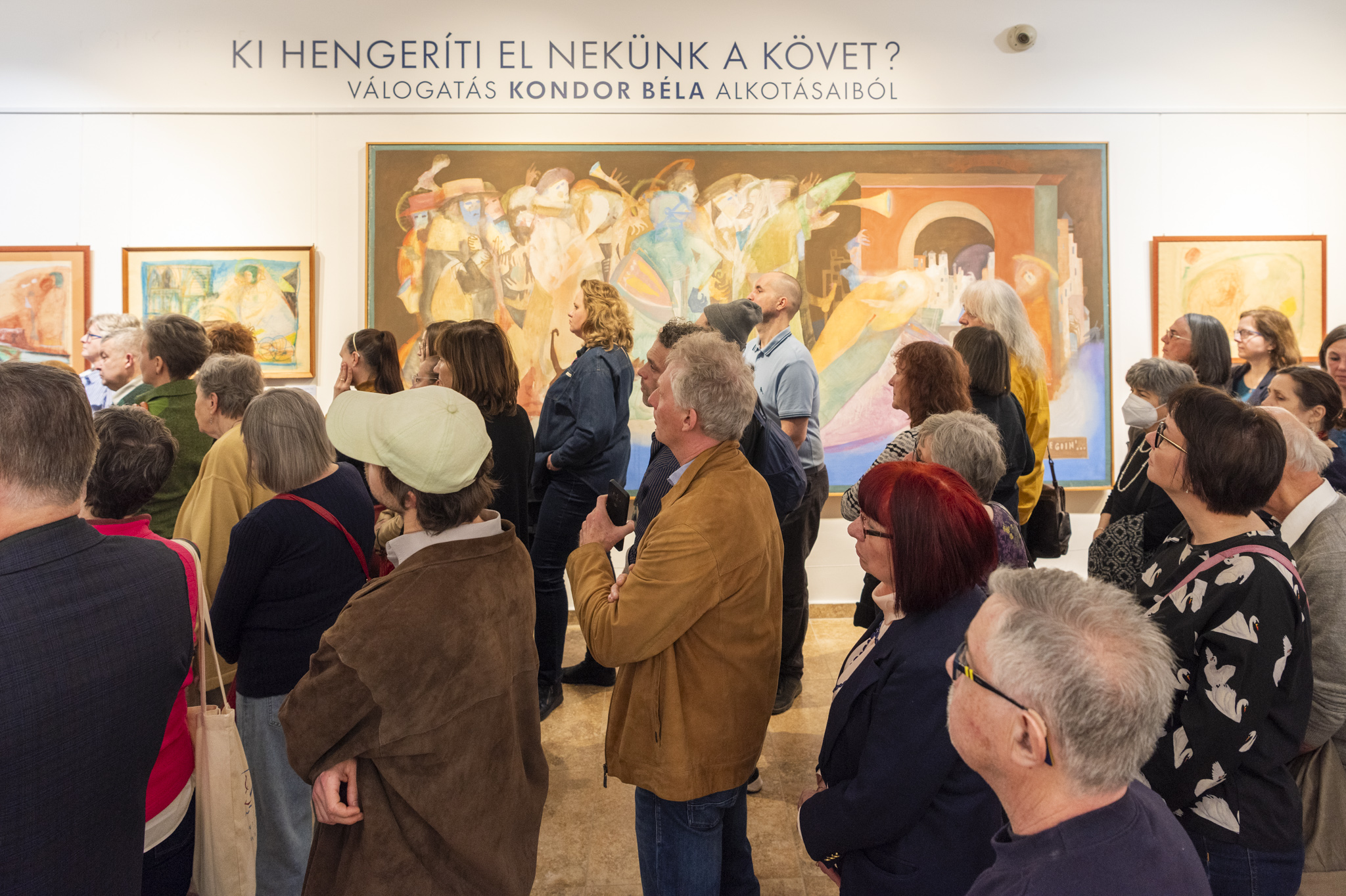
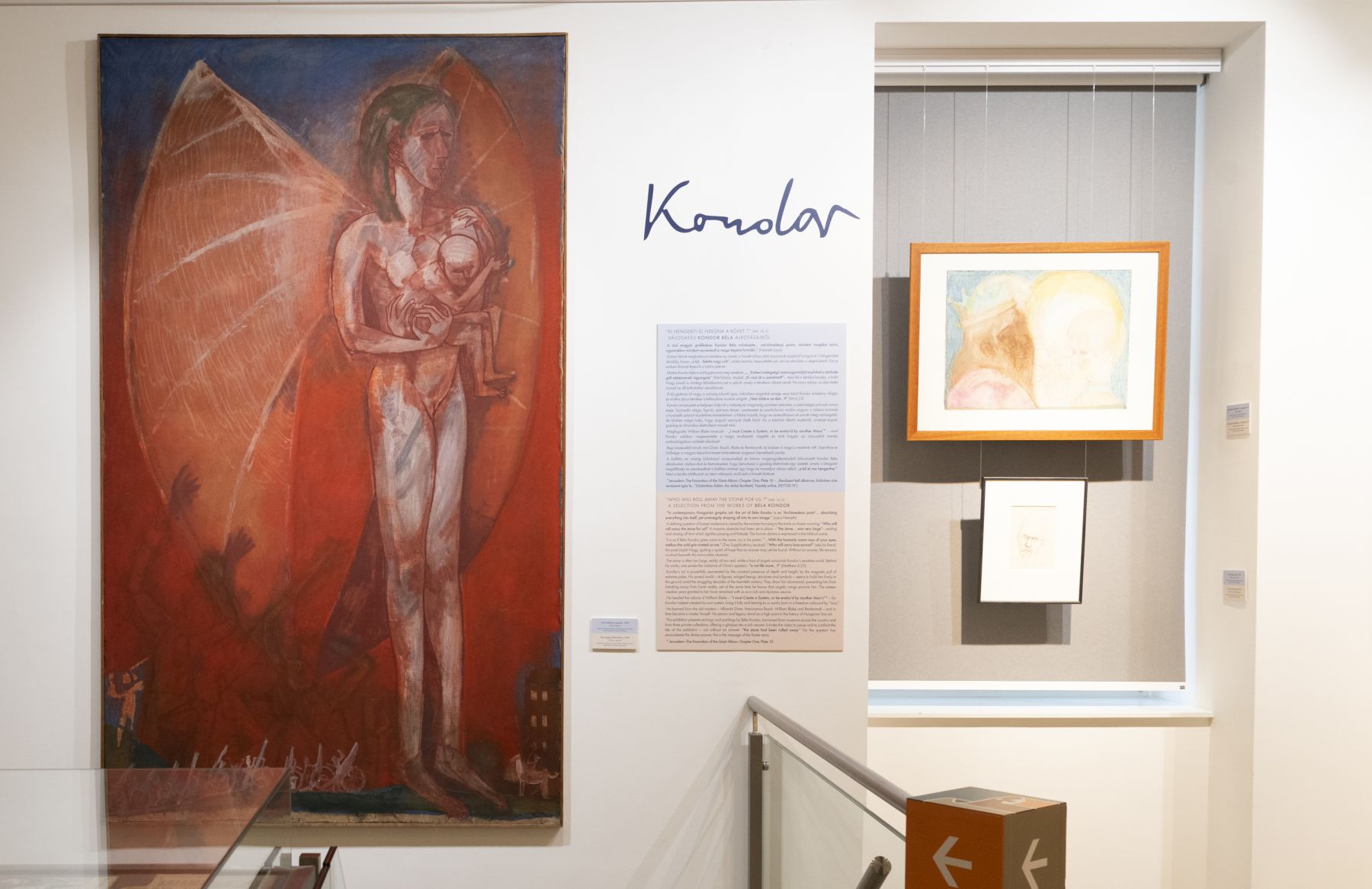
Who will roll away the stone for us? – A Selection from the Works of Béla Kondor
Opening: March 13, 2026
“In contemporary Hungarian graphic art, the art of Béla Kondor is an ‘Archimedean point’… absorbing everything into itself, yet sovereignly shaping all into its own image.” (Lajos Németh)
A defining question of human existence is voiced by the women hurrying to the tomb on Easter morning: “Who will roll away the stone for us?” A massive obstacle had been set in place — “the stone… was very large” .— sealing and closing off that which signifies passing and finitude. This human drama is expressed in the biblical scene.
It is as if Béla Kondor gives voice to the same cry in his poem: “…With the humanly warm rays of your eyes, mellow the cold grin riveted on me.” (Two Supplications, excerpt). “Who will carry love across?” asks his friend, the poet László Nagy, igniting a spark of hope that an answer may yet be found. Without an answer, life remains crushed beneath the immovable obstacle.
The stone is often too large, reality all too real, while a host of angels surrounds Kondor’s sensitive world. Behind his works, one senses the radiance of Christ’s question: “Is not life more…?” (Matthew 6:25).
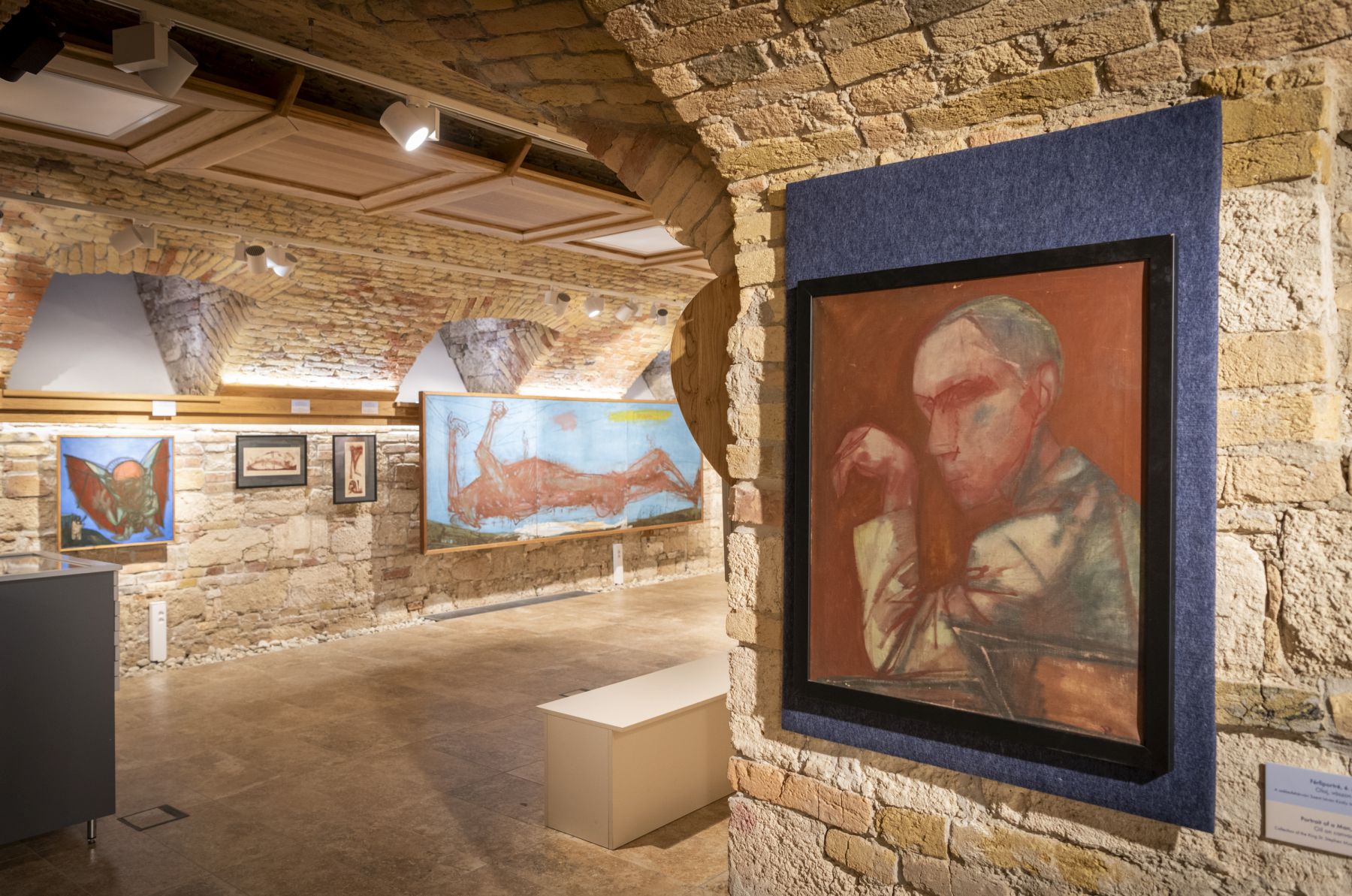
Kondor’s art is powerfully permeated by the constant presence of depth and height, by the magnetic pull of extreme poles. His surreal world — its figures, winged beings, structures and symbols — seems to hold him firmly to the ground amid the struggling decades of the twentieth century. They draw him downward, preventing him from breaking away from harsh reality, yet at the same time he knows that angelic wings encircle him. The sixteen creative years granted to him have remained with us as a rich and dynamic oeuvre.
He heeded the advice of William Blake — “I must Create a System, or be enslav’d by another Man’s”* — for Kondor indeed created his own system, living it fully and leaving to us works born in a freedom unbound by “isms.”
He learned from the old masters — Albrecht Dürer, Hieronymus Bosch, William Blake and Rembrandt — and in time became a master himself. His person and legacy stand as a high point in the history of Hungarian fine art.
This exhibition presents etchings and paintings by Béla Kondor, borrowed from museums across the country and from three private collections, offering a glimpse into a rich oeuvre. It invites the visitor to pause and to confront the title of the exhibition — not without an answer: “the stone had been rolled away.” For the question has encountered the divine answer; this is the message of the Easter story.
* Jerusalem—The Emanation of the Giant Albion: Chapter One, Plate 10



Photos: Tamás Füle
“Neither Height nor Depth…” – In Memoriam William Blake
Selection from the works submitted to the call of the Contemporary Gallery of Tatabánya
On view: until February 28, 2026.
This year’s call, announced within the long-running In Memoriam series of the Contemporary Gallery of Tatabánya, invited artists to give visual form to the spirit of William Blake. From nearly two hundred and fifty submissions, the jury selected seventy works for exhibition, twenty-two of which are presented in this temporary chamber exhibition of the Bible Museum.
In the exhibited works, two creators meet: one from the 18th century and one contemporary. Accordingly, two artistic forms overlap, and the artists employ a variety of techniques as their means of expression.


Photos: Tamás Füle
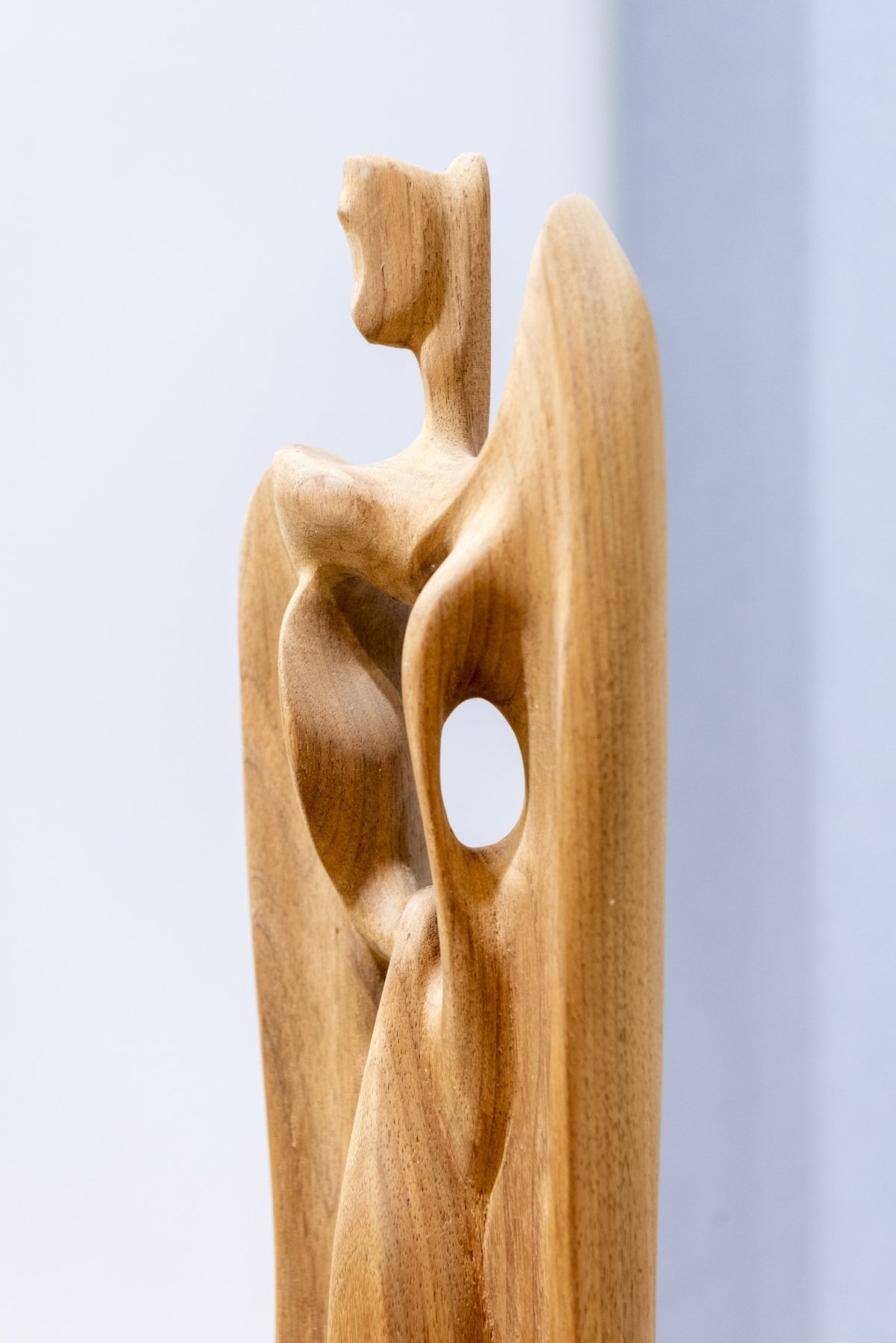
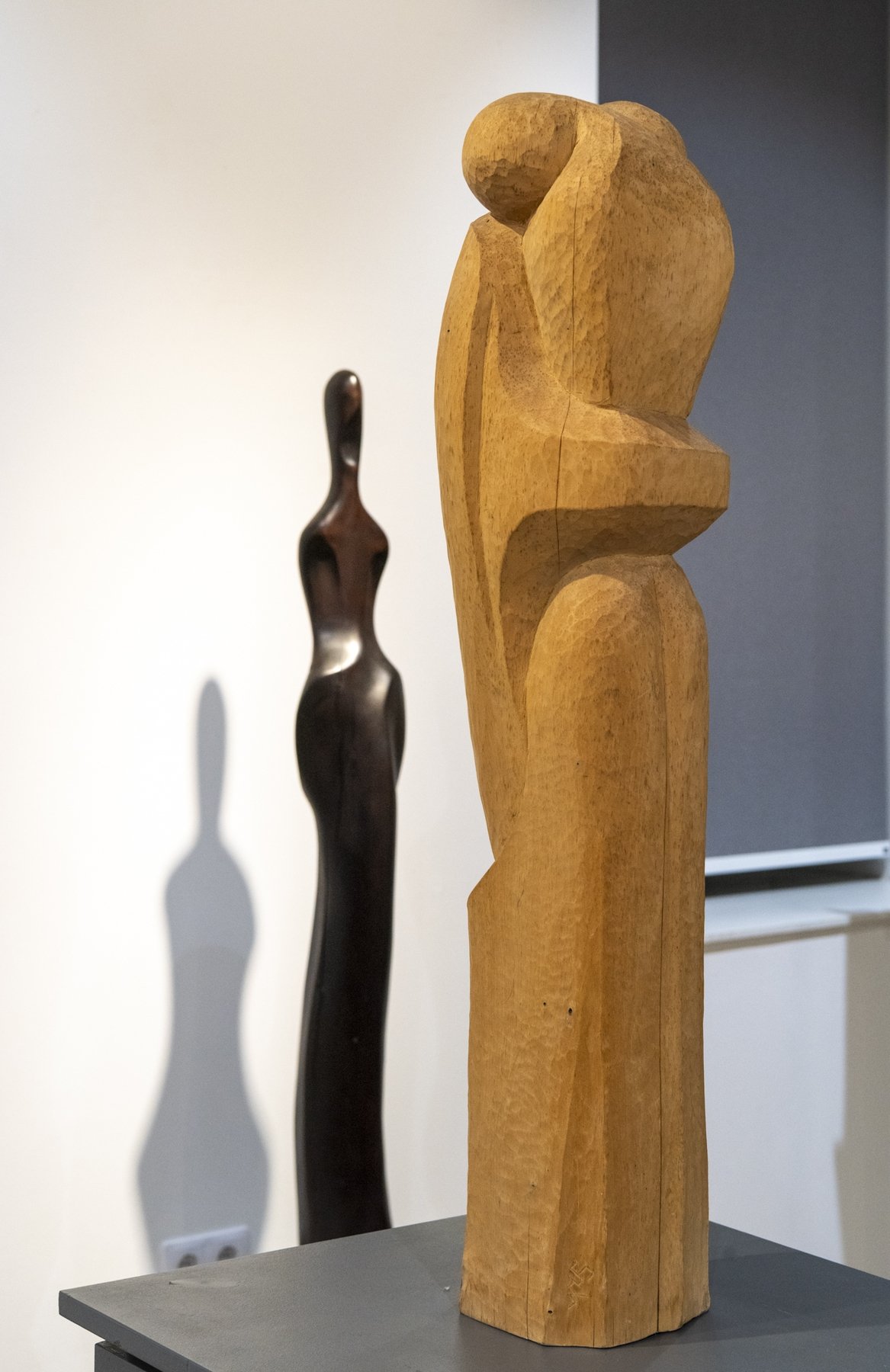
Embrace of Annuli
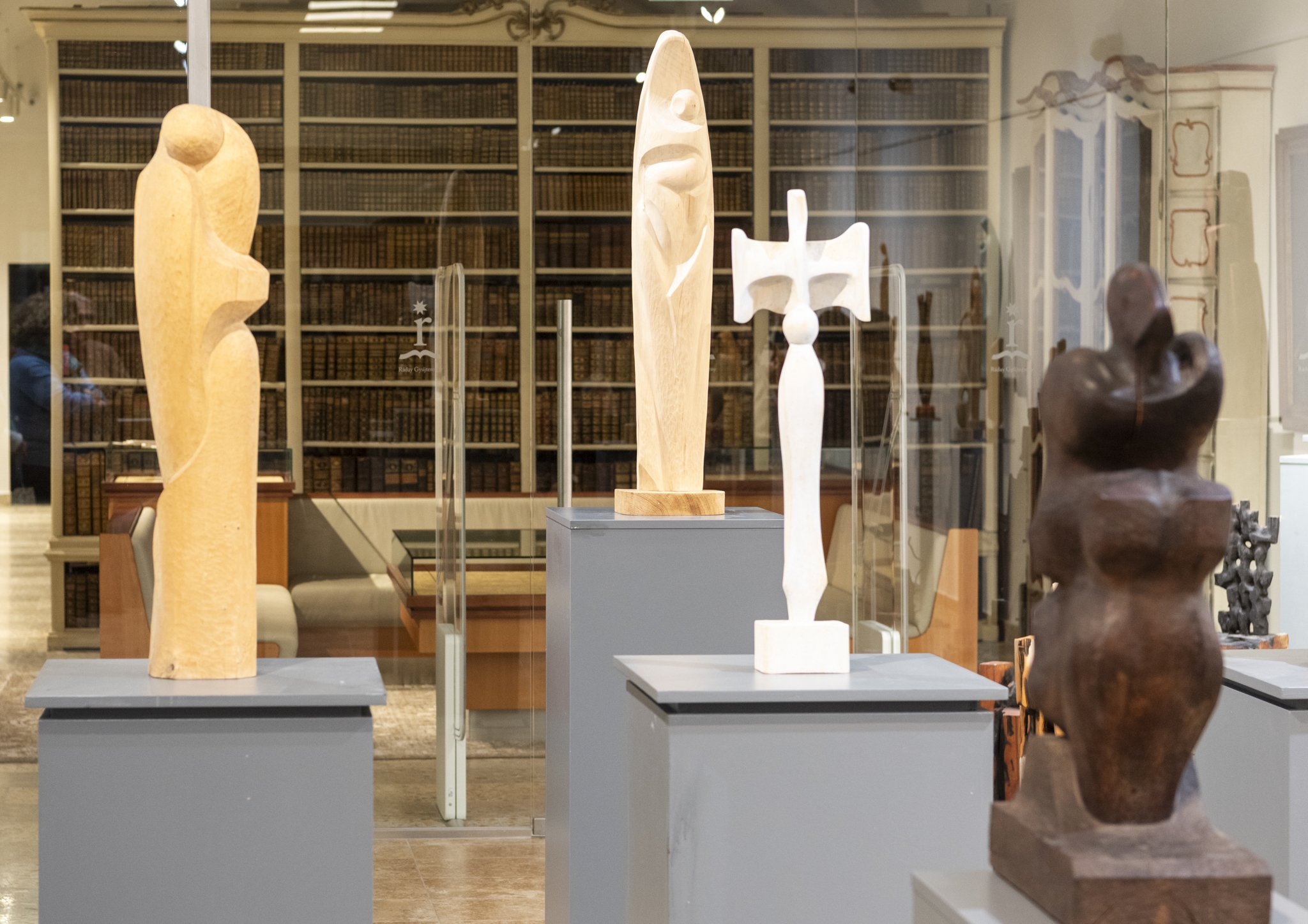
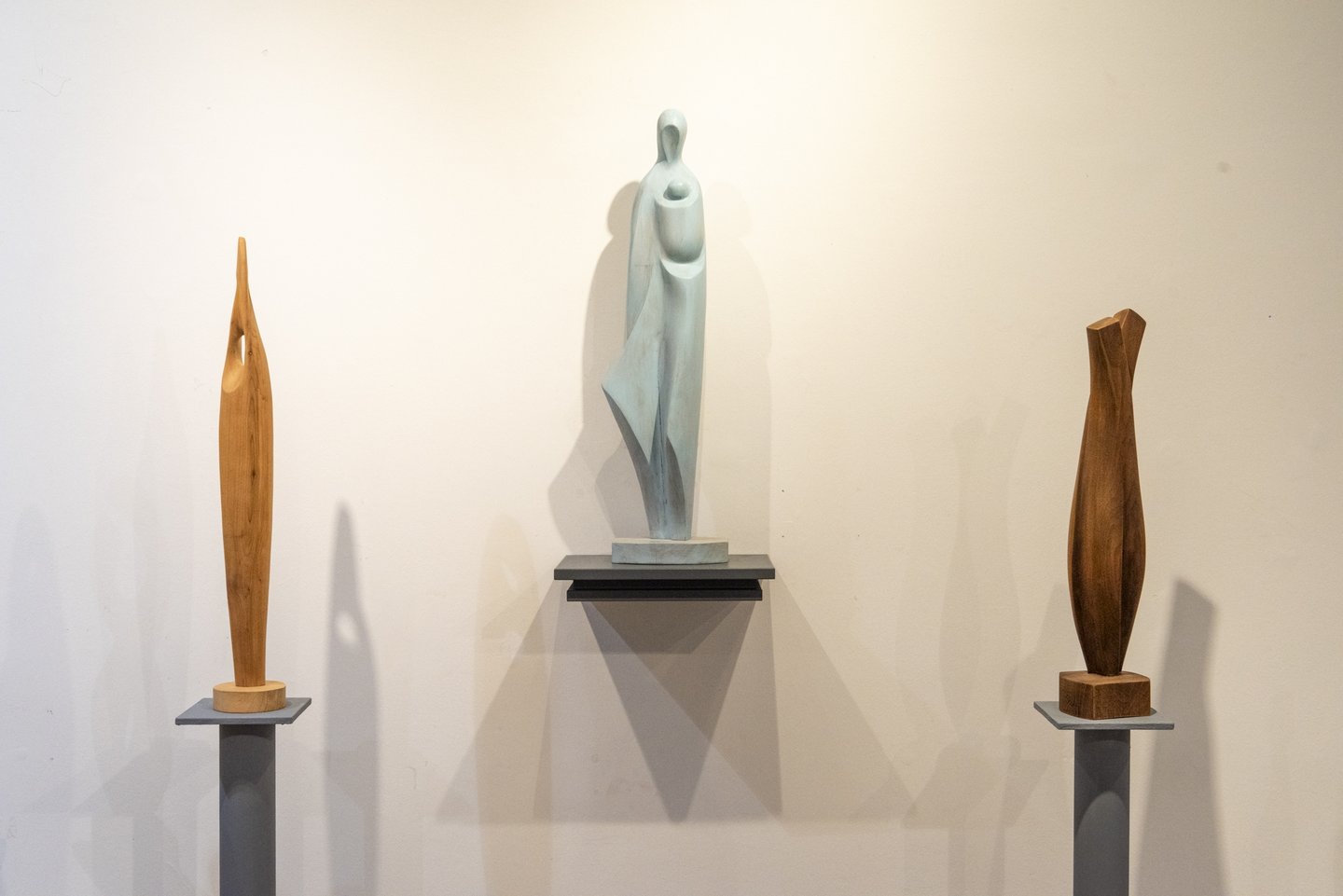
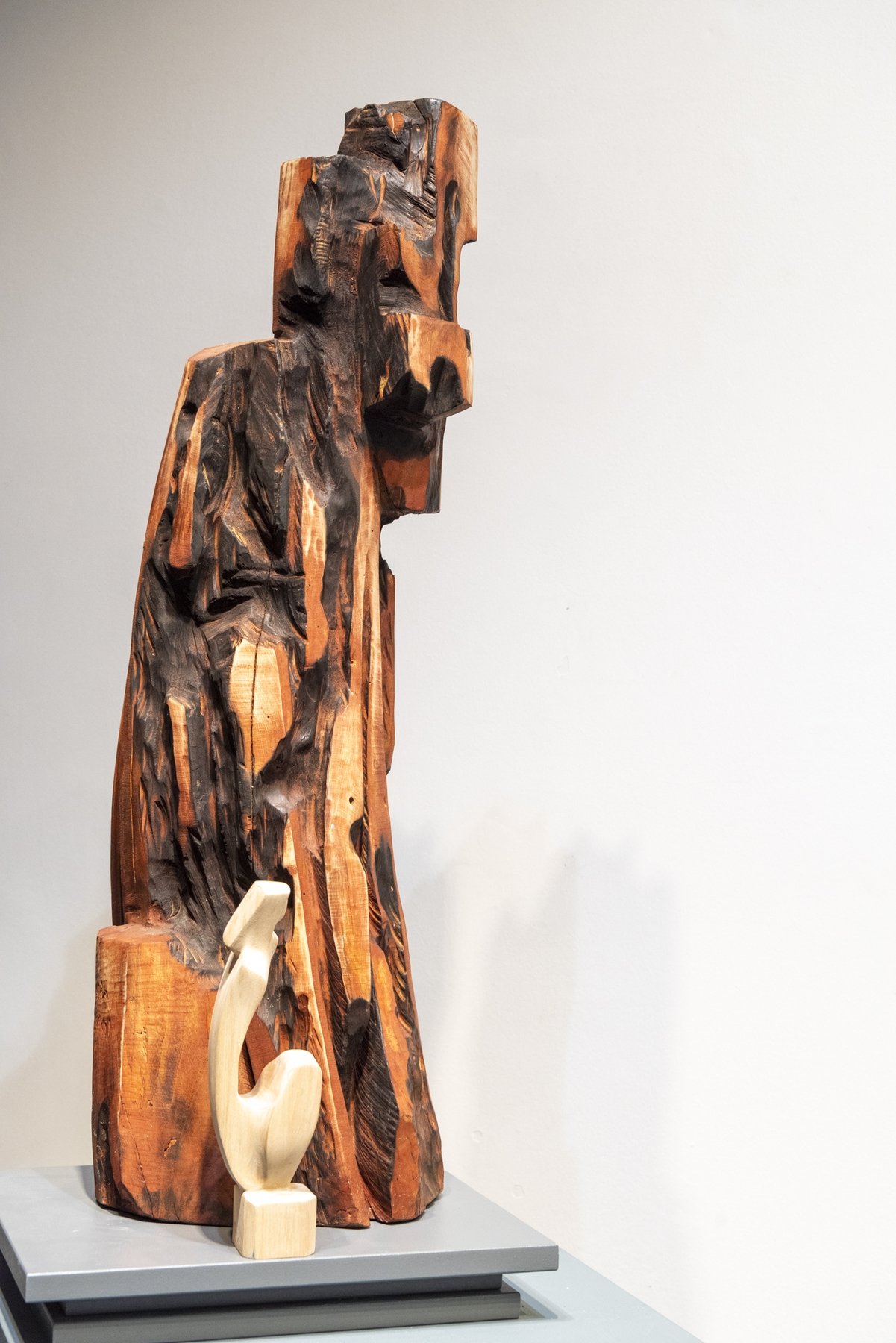
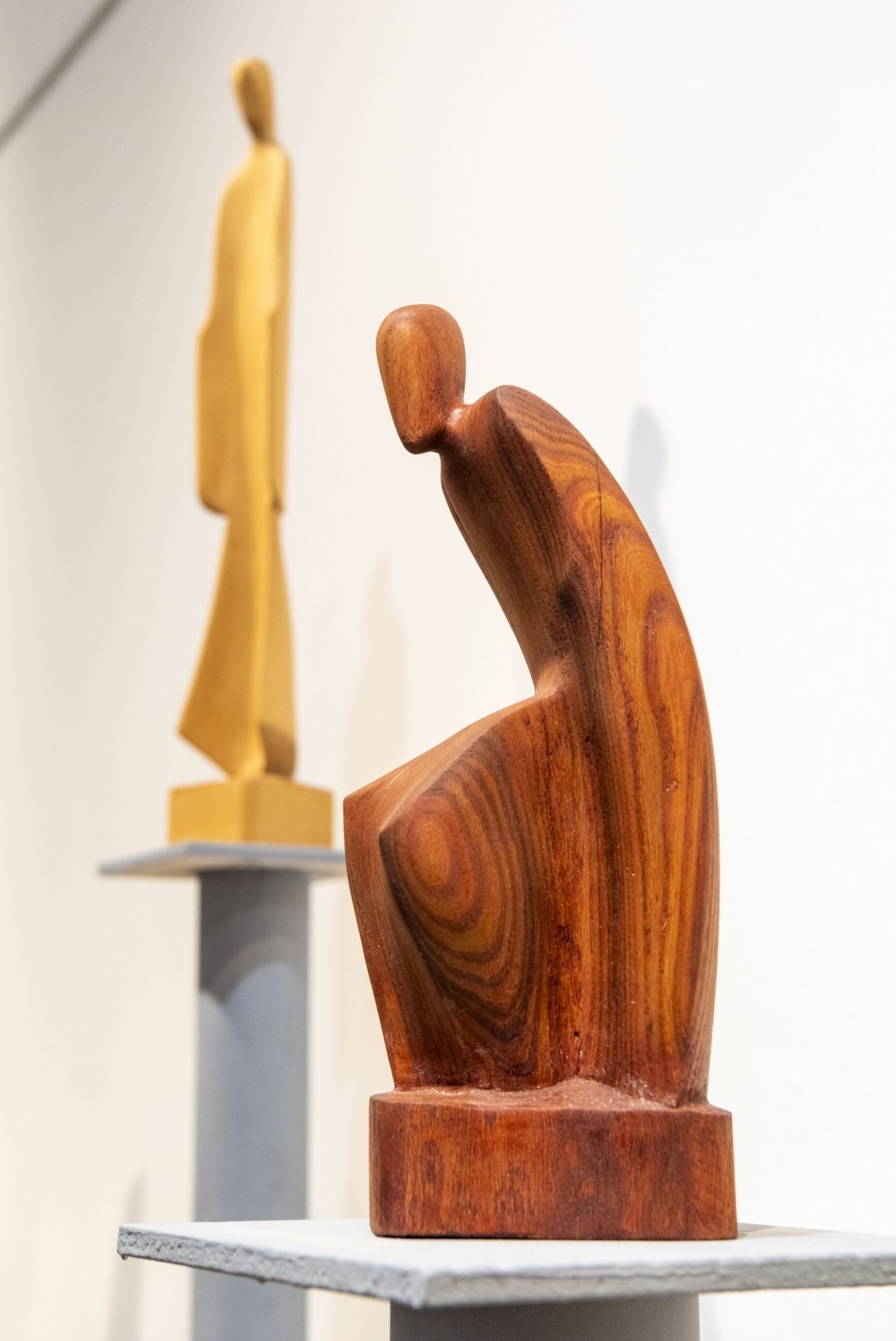
The works of sculptor László Szabó
On view: until February 28, 2026.
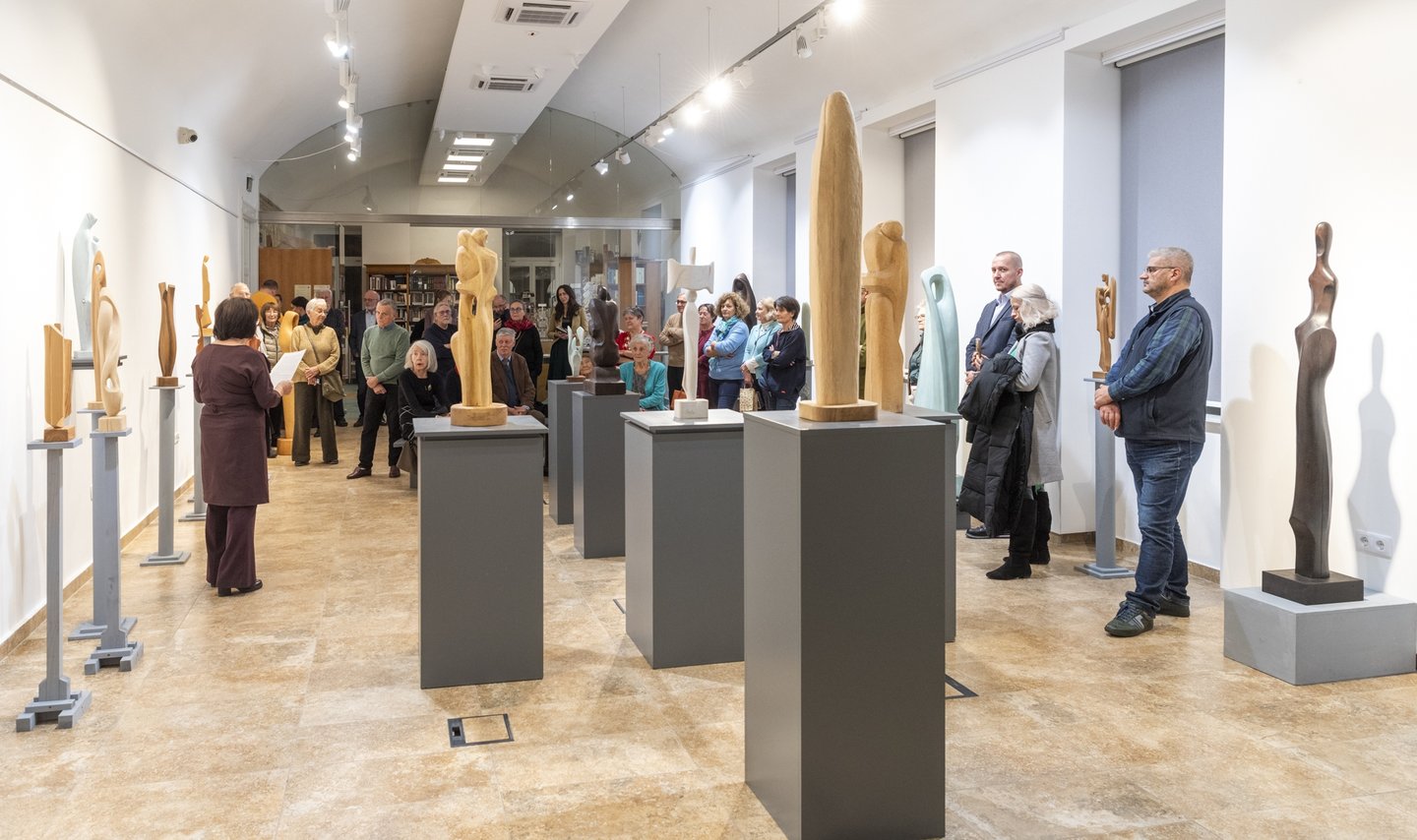
László Szabó was born in Nagyváty (Baranya County) in 1948. He has been drawing since childhood. He learned several trades, which shaped his relationship with materials and tools. He began carving in 1983, first creating folk figures, then his characteristic world of form developed: sculptures with elongated, carefully finished surfaces. The material of his works is wood, which he loves because of its malleability. According to his own words, he wants to show what is beautiful and noble in human life, and what few people notice in his fine, harmonious works. He often creates mother figures, but he was also sensitively affected by the Russian-Ukrainian war that broke out in 2022, as an imprint of which, burnt, cracked and mutilated surfaces appeared in his work, to express pain and at the same time survival. László Szabó currently lives and works in Pécsvárád.
Photos: Tamás Füle